YOGA BLOG
What Moves Us…..

RICHARD ROSEN'S ASANA BREAKDOWN
TADASANA
tada = mountain
1. Stand with your feet slightly apart, inner feet parallel or big toes slightly turned in. The latter will impart a slight inward rotation to your upper thighs, which is something you want. Lift your toes away from the floor (but keep your fingers relaxed) and spread the balls of your feet, then lay the toes lightly down. Press the bases or mounds of the big toes firm to the floor, then draw imaginatively back from there to the inner ankles.
2. Next draw up imaginatively up from the inner ankles along the inner legs to the inner groins, where the inner thighs join the base of the pelvis. Firm the front thigh muscles (quadriceps) so that the knee caps are pulled up toward the hips. Make sure as well that the center of the caps are looking straight forward. If they’re slightly turned in, it’s likely you’re hyper-extending and so locking your knees to some extent. If such is the case, bend your knees slightly and turn the outer knees back as much as needed to bring the kneecaps forward.
3. If you need to do this, however, you might find the upper thighs turning out as well. In this case, you’ll hae to play back and forth between the external rotation of the knees and the internal rotation of the upper thighs. As you turn the thighs inward, the sacrum will widen across the back of the pelvis, and the hip points will narrow toward the navel. The inner rotation though pushes the tail bone out and deepens the lumbar lordosis, not an ideal condition. So to counter the “duck tail,” think of lengthening the tail bone down toward your heels. Understand though this isn’t a “tail tuck,” which will flatten the low back, another undesirable situation. Simply stretch your tail imaginatively straight down to the heels and then let it “lengthen” out behind your body like a long kangaroo tail. Imagine the back heels reaching down into the floor to the center of the Earth, 3900 miles away.
4. Now join the two imaginary lines rising along the inner legs and watch that line continue up through the core of your torso, from the middle of your perineum to the very top of your head and out. The line of imaginary energy terminates at the “end of 12” (dvadashanta), an imaginary point about a foot above your head. Lift the base of your skull lightly away from the nape, then release the nape down the back torso and through the tail.
5. Release your shoulders away from your ears and let the arms dangle, keep the fingers relaxed.
Open equally across the upper back and chest, don’t squeeze the shoulder blades to spread the collar bones. Then press the lower tips of the scapulas up and into the torso, angling diagonally up to the top of the sternum. Be sure not to push the lower front ribs forward to encourage this. Always think of lifting the back ribs faster than the front.
6. Finally close your eyes and allow yourself to sway, feeling how your weight shifts on the soles, side to side, front to back. Gradually slow the swaying almost or completely to a stop, and bring a bit more pressure to the bases of the big toes and inner heels without collapsing the arches. Stay for a minute or two, feeling the distribution of your weight on your soles. As the tail descends, lift the manubrium straight up and let your head float lightly atop the spine. Breathe slowly and smoothly. Then open your eyes and continue on with your practice.
INTERMEDIATE PRACTICE
Bring your feet together to narrow your base of support. Touch the bases of the big toes but keep the heels slightly apart. You can also sweep your arms out to the sides and up over head. This is called Urdhva Hastasana, Raised Hands Pose. Reach through the little fingers to the ceiling, being careful as always not to push the front ribs forward. Think of reaching up from the back ribs. Hold for 15-30 seconds and release the arms in wide arcs out to the sides. To increase the challenge even further, with your arms raised, lift off your heels onto the balls of your feet. One old text calls this the Camel Pose (ushtrasana). Again hold for 15-30 seconds, then lower the heels back to the floor.
RICHARD ROSEN'S ASANA BREAKDOWN

FOOT AND LEG CHANNELS/CIRCUITS
1. Stand in Mountain Pose, feet slightly apart. Exhale into standing forward bend.
2. With your thumbs, press down firmly on the bases of the big toes. Be sure you’re pressing on the bases of the toes, not the toes themselves. As you do this, imagine the big toes lengthening forward toward the front of the mat.
3. With your fingertips, stroke back from the big toe bases to the inner heels. Repeat several times.
4. From the inner heels, stroke up along the inner legs to the base of the pelvis. Repeat several times.
5. Now bring your hands to the back of your pelvis. From here stroke out across the sacrum, over the outer hips, and down along the outer legs to the ankles. Repeat several times.
6. From the outer ankles, stroke forward along the outer feet asnd lengthen the little toes forward to the front of the mat.
7. Now rest your hands on the floor and imagine the entire leg circuit = bases of the big toes > inner heels > up the inner legs to the pelvis > “through” the pelvis to the sacrum > spread across the back of the pelvis > over the outer hips > down the outer legs to the ankles > forward along the outer feet to the little toes.

Staff Spotlight: Odisa Walker
We have welcomed a few new teachers to our team during shelter in place, some you may be familiar with and a few may be new faces. Getting to know an instructor during regular yoga class sessions can be challenging, even more during Zoom yoga sessions. Nest Staff Spotlight allows fellow teachers, staff members and our yogis the opportunity to delve into the life of a selected community member. We hope this gives everyone a chance to learn more about our teachers and staff. We are elated to have Odisa Walker join the Nest team! Read more about her below.
Tell us about yourself. Anything you want people to know.
I am a teacher. Even as a young child my dream was to be a teacher. I graduated from college, received my teaching credential and started teaching fourth grade. It was a dream come true. I have four children between the ages of 12 and 24. My husband and I have been married for 29 years! My dad lives with me, three of my children, my husband and my three dogs. Teaching yoga since 2003 has replaced teaching in schools and feels like an extension of my dream to be a teacher.
When was the last time you laughed so hard you cried?
Well, I can’t remember the last time I laughed so hard I cried but what came to mind was a memorable time. This story goes back about 27 years, I was just a couple years into being married and so, so young. I was packing up to move across the country and I came upon my favorite childhood stuffed animal, a dog named Bubbles. Well, Bubbles was not looking too good and I was sort of laughing about it with my husband and when I pulled on one of Bubble’s ears it fell off of him. I started laughing and the laughing turned a little hysterical and then all of a sudden I was crying. My childhood flashed before my eyes and the reality of moving across the country, not being a child anymore and leaving my family behind was just too much. I scared myself and my young husband as we went from laughing to all of a sudden me crying with him still laughing. Good news is we made it cross country several times and Bubbles is still around as is my husband.
What is your favorite book/movie/tv show/podcast?
My current favorite podcast is The Breakdown by Shaun King. My 12 year old daughter and I (sometimes my 17 year old son too) have been listening to it together. It’s one way that I’m trying to stay informed and educated so I can take action. Also, listening to it with my daughter and knowing that she is hearing about the injustices and the things that we need to change in this country feels important. She knows she is safe and protected in our home but she also needs to be aware of the injustice and inequality in our country.
What would you like the community to know about your classes, teaching style or you?
I love what I do. I love teaching yoga and I believe in its power to heal body, mind and spirit. I believe in the power of movement, in the power of our breath and when we link the breath and movement it is like a super power. I teach a breath centered practice that I want to be accessible to every body. I want the student to feel connected to their breath and their body when they practice. I want students to feel grounded, calm and complete just as they are after taking class.
What’s a typical day like for you?
A typical day has me checking in with each person and animal in my house. Everyone gets a little piece of me including myself. I walk my dogs several times a day and on these walks I often have either my dad, my husband, or my youngest daughter with me and sometimes all at once. I teach and I practice yoga in the mornings and that has been such a grounding force during SIP. I try to spend time doing nothing every day, to put down my phone, my computer, my tablet and just sit outside and enjoy the beauty around me.
What is your least favorite yoga pose? Favorite yoga pose? Why?
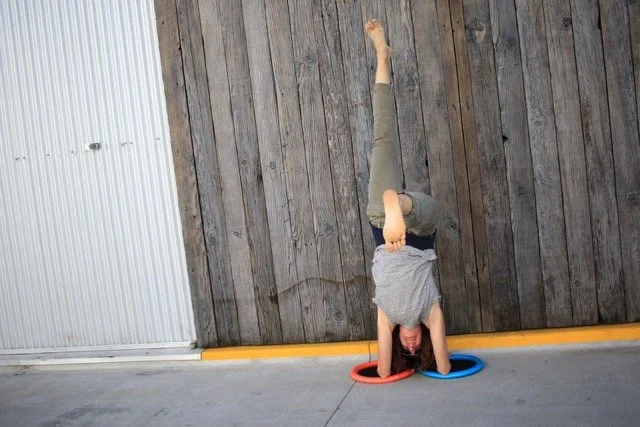
I honestly don’t think in terms of favorite or least favorite but for the sake of this questionnaire I will choose. My ‘least favorite’ yoga pose is probably shoulder stand. I rarely do it because it just hasn’t felt good in a long time. Today as I’m writing this headstand feels like my favorite pose. I feel powerful, stable and strong when I am in a headstand. I don’t do a headstand every day, I don’t feel like I need to but I love it.
What do you love most about your hometown?
I was born in Los Angeles, California and love the memories of my childhood that are attached to so many places there. It is the place that I picture my mother's spirit fluttering, flying and dancing.
How did you find yoga?
My dad taught me about yoga as a young child. He was a dedicated practitioner and even taught way back in the seventies before there were teacher certifications.
What’s a goal you have for yourself that you want to accomplish in the next year?
I want to spend more time doing nothing. I feel like I could spend my whole life chasing after the next accomplishment, and the more, more, more mentality of our culture. I want to do less and be happy with what is.
Odisa teaches Vinyasa every Monday at 12 pm! This class is all levels. Follow her on Instagram @odisawalker or visit https://www.odisayoga.com to learn more!
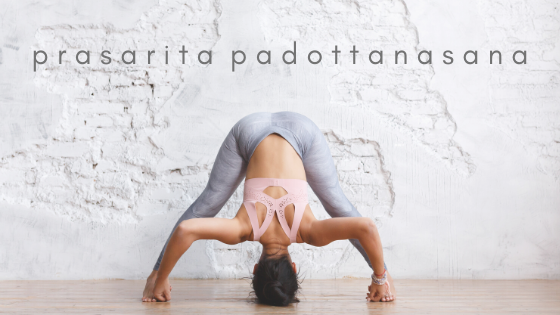
RICHARD ROSEN'S ASANA BREAKDOWN
PRASARITA PADOTTANASANA
(Pra-SAH-ree-tah pah-doh-tahn-AHS-anna)
prasarita = stretched out, expanded, spread, with outstretched limbs
pada = foot
ut = intense
tan = to stretch or extend (compare the Latin verb tendere, “to stretch or extend”)
Intense Spread Leg Stretch
Prasarita Padottanasana is essentially a wide-stance standing forward bend; indeed, prasarita padottana literally means “spread out feet intense stretch.” Technically the pose in the spotlight here is PP I, the II version is slightly more challenging and is typically performed as part of a two-pose sequence with Intense Side Stretch Pose (Parshvottanasana). For our purposes, PP I (hereafter referred to simply as PP) will be performed in three stages, which we will ingeniously dub one, two, and three.
Not surprisingly for a forward bend, PP stretches the backs of the legs and, and because of its wide stance, the inner groins. In a pinch it also serves as a substitute, as do all the standing forward bends, for Head Stand (Shirshasana), since the head is brought lower than the heart. Many of the benefits of the latter pose–especially bathing the poor old tired brain with freshly oxygenated blood to perk it up–accrue to PP without any of the weight-bearing stresses on the neck. And in general PP is a good warm-up for other wide-stance standing poses, like the Warrior variations (Virabhadrasana I, II, III) and Side Angle Pose (Parshvakonasana).
PRELIMINARY
Many beginners are somewhat reluctant to stand as wide as they should in PP. Of course the exact distance between your feet depends on the length of your legs, shorter people won’t stand as wide as taller folks. A good way to determine your width is to start in Mountain Pose (Tadasana) with your arms stretched out straight to your sides, parallel to the floor. Step your feet apart until each is approximately below the same-side wrist. If you can’t easily touch the floor in a standing forward bend with straight knees, be sure to have a couple yoga blocks handy to support your hands. Never force yourself into a forward bend: if you have to round your torso forward from your belly to get your hands on the floor, it’s really counterproductive and potentially injurious. Don’t be stubborn, USE THOSE BLOCKS.
PRACTICE
1. Stand in Tadasana, facing one of the long edges of your sticky mat, then step or lightly hop your feet apart anywhere from 3½ to 4½ feet (depending on your height, taller people wider). Rest your hands on your hips. Make sure your inner feet are parallel to each other. Lift your inner arches by drawing up on the inner ankles, and press the outer edges of your feet firmly into the floor. Strengthen your thighs. Inhale and lift your chest, making the front torso slightly longer than the back.
2. Exhale and, maintaining the length of the front torso, lean the torso forward from the hip joints. As your torso approaches parallel to the floor, press your fingertips onto the floor directly below your shoulders. Extend your elbows fully. Your legs and arms then should be perpendicular to the floor and parallel to each other. Move your spine evenly into the back torso so that your back is slightly concave from the tail bone to the base of the skull. Bring your head up, without crunching the back of your neck, and direct your gaze upward toward the ceiling.
3. Push your top thighs straight back to help lengthen the front torso, and spread your inner groins to widen the base of your pelvis. Take a few breaths. As you maintain the concavity of your back and the forward lift of your sternum, walk your fingertips back toward your feet, keeping the elbows straight. When you reach your limit of the straight-arm, fingertip walk-back, take a few more breaths and then, with an exhale, bend your elbows and lower your torso and head into a full forward bend. Make sure, as you move down, that you keep your front torso as long as possible. If possible rest the crown of your head on the floor.
4. Press your inner palms actively into the floor, fingers pointing forward. If you have the flexibility to move your torso into a full forward bend, walk your hands back until your forearms are perpendicular to the floor, be sure to keep your arms parallel to each other. Strongly push the elbows away from the mid-back. Draw your shoulders away from your ears.
5. Stay anywhere from 30 seconds to 1 minute. To come out, bring your hands back on the floor below your shoulders and lift and lengthen your front torso. Then with an inhale, rest your hands on your hips, pull your tail bone down toward the floor, and swing the torso up. Walk or hop your feet back into Tadasana.
- Benefits
Strengthens and stretches the inner and back legs and the spine
Tones the abdominal organs
Calms the brain
Relieves mild back ache
- Modifications & Props:
Some beginners aren’t able to easily bring their hands to the floor and need a good deal of support in this forward bend to protect their lower back. Try raising your hands off the floor by resting each on the end of a block. If your back is still rounded, then use a folding chair to support your forearms. Always remember in forward bends to emphasize the length of the front torso.
- Variations:
The pose as described here is technically known as Prasarita Padottanasana I (in the Iyengar system). Prasarita Padottanasana II is a more challenging variation. Perform step 1 of the main description above. Then bring your hands into anjali mudra but behind your back, a hand position technically known as prstanjali mudra (prsta, pronounced prish-ta, meaning “the back or rear of anything”). To do this lean your torso slightly forward and round your back. Then press your palms together behind your back with your thumbs resting on your sacrum, finger pointing toward the floor. Exhale and turn the fingers, first toward your back, then upward, so they point toward the ceiling. Slip the pinky sides of your hands up your back as high as possible, ideally between your shoulder blades. Roll your shoulders back and lift your chest, pressing the pinkies deeply into your spine. Finally exhale into your forward bend and bring your head close to or onto the floor. If this hand position isn’t possible for you, simply cross your forearms behind your back and hold the elbows with the opposite hands.
- Beginners Tip:
Most beginning students aren’t able to easily touch the crown of their head to the floor in the last stage of this forward bend. Instead you can support your head on a padded block, a thickly-folded blanket, or a bolster.
- Advanced Tip:
Advanced students can get a better sense of how to work the arms in this pose by using a block. Set a block on one of its sides, with its long axis parallel to the long edge of your sticky mat, on the floor in front of you. Lean forward into the pose and grip the block between your forearms, just below the elbows, and pick it up off the floor. Then complete the pose with your palms and crown on the floor. Now squeeze the block firmly between your forearms, pressing your inner hands actively into the floor. This action of the arms will also get you ready for poses like Headstand II and Pinca Mayurasana.
PRASARITA PADOTTANASANA
One of the strange rules of that strange language, Sanskrit, is called sandhi, literally “junction.” The words in a Sanskrit sentence aren’t spaced apart like English words, instead they’re allstrungtogetherlikethis. But that’s not all. Often the letter that ends one word is “euphoniously combined” with the letter that begins the next to form a brand new letter. I won’t even try to explain how and why; as a simple example though, let’s look at padottanasana, which is actually a combination of three separate words: pada, uttana, and asana. Notice that when the final “a” of pada meets the “u” of uttana, the two letters are combined as “o”(the same occurs in the famous mantra OM, which is actually spelled AUM), and when the final short “a” of uttana meets the beginning short “a” of asana, the two become a long “a.” (and the pronunciation changes from “uh” to “ah”).
What does this have to do with yoga? Traditionally daily yoga practice was timed according to sandhya, a word related to sandhi which also means “junction,” but more particularly the significant “junctions”of night and day–dawn and dusk, noon and midnight. Sandhya, like sandhi, takes place at the confluence of two “letters,” here the light of day and dark of night. Throughout most of a 24-hour day, one letter is dominant though tinged to some degree with the other. But at dawn and dusk they’re in balance, at noon and midnight one is purified of its other. The yogis believe these outer conditions are intimately related to and powerfully influence the constantly shifting “light” and “dark” energies of our lives (usually characterized as HA and THA or Sun and Moon). During the outer sandhya, its balance or purity is reflected in our normally unbalanced or impure consciousness. This naturally calms our mind and induces a meditative state, which is why Svatmarama, author of the fourteenth century Hatha Yoga Pradipika enjoins us to practice “four times a day–morning, midday, evening, and midnight” (2.11).
Of course I’m not suggesting we practice four times a day, for most of us just once a day is a triumph. But every now and then we should stop whatever we’re doing at sandhya and watch how the outer play of light and dark is affecting the inner play of our life energies.

A Personal Message from Gabrielle Williams
Hi Friends! I hope that this message finds all of you and all of yours safe & well during these challenging times.
Some of you know me from pre-Shelter-In-Place (SIP) days when I regularly taught Bhakti Flow at Nest Yoga. To those of you that I have not met, please accept my heartfelt introductions to you here.
Dear friends, I am writing to you for many reasons. One reason being that at the request of the owner of Nest Yoga, Kim Lally, I will soon be returning (post-furlough) to the Shala to teach a (virtual) Vinyasa class that I have chosen to call, Yoga for Solidarity. Incidentally, Yoga for Solidarity is a class that aims to provide Sangha (Yogic community) a milieu for Asana practice that offers-up intentions to end violence against and/or systematic oppression of black people, people of color (POC), and any other marginalized groups.
On the one hand, I feel that Yoga for Solidarity is a type of class that is much needed at Nest Yoga at this time. On the other hand, however, in returning to Nest to teach Yoga for Solidarity, I will be one of very few black and/or POC Yoga teacher(s) employed at this Oakland-based Shala. It is this detail that largely influences most of the reasons that I am writing to you all. I want to write to you before I return to Nest to make clear that I notice this “detail,” I am exasperated by this “detail,” and that voicing of my exasperation to Kim about this “detail” has been met with her expressed willingness to change things at the Shala in the context of Equity, Diversity, and Inclusion guidelines for fair workplace standards.
Most of you that know me as your Bhakti Flow teacher also know that I follow dual career paths as a Yoga instructor, as well as a professor of African American & African Diaspora Studies at Cal. To all of you, I cannot stress enough how I am absolutely dedicated to both of the career paths that I pursue. I am returning to Nest confident in my ability to hold peaceful, non-conflicted Yogic space for the forthcoming Yoga for Solidarity class. Yet, please know, dear friends, that the confidence I have in terms of truly being able to hold peaceful space for Yoga for Solidarity would not be possible had I failed to express the discontents & protestations that pepper this message.
Sending light and supportive energy to you all!
Gabrielle Williams, PhD.
Our Blog
Check out the latest Articles: