YOGA BLOG
What Moves Us…..
Richard Rosen's Asana Breakdown: Warm-up Sequence
WARM-UP SEQUENCE
in preparation for Roots of Modern Yoga - January 27th with Richard Rosen
I’ve had a copy of BKS Iyengar’s Light on Yoga now for 40 years. When I bought my first copy of this book (I’m probably on my fourth one by now), yoga instructional manuals were few and far between, and the 198 asanas (there are also two mudras) were just about the only ones we knew about. And of those 198, there are at least a quarter of them that are far beyond the ability of most students. Today of course, there are countless manuals available – I have at least 60 in a bookcase in my practice space. That’s just the tip of the iceberg – but the asanas included in them are pretty much the same as those in Light on Yoga.
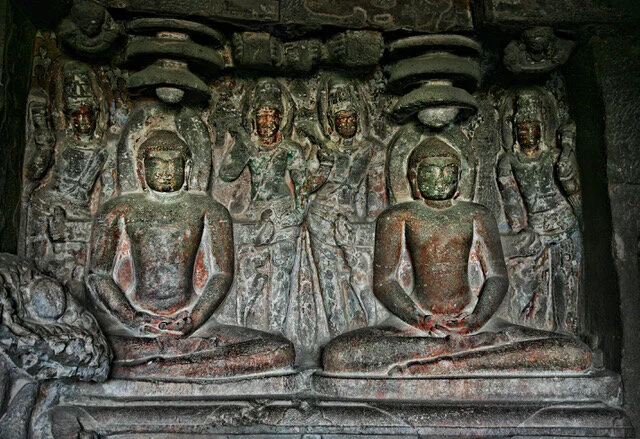
So it’s not widely known that there are literally hundreds of traditional asanas that haven’t been known and practiced for a very long time. One of the manuals I own is titled The Encyclopedia of Traditional Asanas, published by the Lonavla Yoga Institute in Lonavla, India. The editors of this book searched through over 160 manuscripts, many of them unpublished and so unavailable in English translation, and found over 900 asanas. A few of them are rather strange. Take, for example, dikshasana, the pose of “initiation” (diksha). If you’d like to try, simply stand under an ashoka tree, the “sorrowless” tree, which conveniently grows in the foothills of the Himalayas, and pull five handfuls of hair out of your head. This is a practice performed by Jaina monks as a preparation for their initiation. By doing this, the book assures us that “one attains peace.”
About half the poses in the book are far beyond the average student’s ability, but the other 450 offer a rich store of asanas to choose from. A good many of them are familiar to us, but there are also several hundred that have dropped out of use that could very profitably be rescued from oblivion. Such is the goal of the upcoming workshop on January 27th: Roots of Modern Yoga. In this workshop, we’ll have a go at some of the more accessible of these forgotten asanas.
Here’s a simple sequence that we’ll use as a warm-up for the class. Lie on you back with your heels stretched away from your pelvis and your arms overhead, stretched out in the opposite direction. Three hundred years ago this exercise was initially known as tadagi mudra, the “pond seal,” because in doing the stretch, the lower belly naturally hollowed out like a “pond.” Somewhere along the way, it transmogrified into an asana, yashtikasana, the “stick pose.” Hold for a few minutes, directing your inhales into the back of your sternum to open the chest. On the exhales, reach out a bit more through the feet and hands.
Next with an exhale, draw your thighs to your belly and wrap your arms either around the shins or back thighs, whichever you prefer. Today we know this pose as pavana muktasana, the “wind-freeing pose,” but tradition calls it the “millstone pose” (drishadasana). One of the texts including this exercise recommends rolling from side to side. Hold for about a minute. If you’d like to challenge yourself a little more (and who doesn’t want more challenge in their lives nowadays?), exhale and curl into a ball shape by lifting your nose to your knees. Would you like to guess this pose’s name? I’ve already given a hint – that’s right, “ball pose” (kandukasana). Hold for 30 seconds or so, feeling the length growing along your back torso from the tail bone to the base of the skull.
Want to go even further? Clasp your hands on the back of your head, and press your elbows to your knees, hold for 30 seconds to a minute. This is called – and this will seem odd to us – uttanasana, the “intense stretch pose,” which we know as the standing forward bend. Here’s an example of how, throughout the long yoga tradition, sometimes the same name is given to two much different poses. The opposite will also occur, the same pose given two very different names.
Finally, for all you cat lovers, squeeze your elbows between your knees. This is marjara uttanasana (majarottasana), the “intecat pose.” Again hold 30 seconds to a minute, then slowly release your spine to the floor one vertebra at a time – the head comes last. Stretch your hands overhead once again, raise your legs to perpendicular, and stretch your torso between the thigh bones and fingertips.
One more time hold for about a minute, letting the legs weigh down on the pelvis, and widening the back torso on the floor. This is called the “scorpion pose” (vrishikasana). As you may know, the two poses with that name today are much different and much more challenging. When done, lower your legs slowly to the floor and let yourself release. Take a few breaths and smile.
The sequence for the class continues on from here. Do you want to learn the “sandal pose” (padukasana)? How about the “potter’s wheel” (kulala cakrasana)? Or the original “camel pose” (ushtrasana)? See you on January 27th, 9 AM sharp...
~ Richard Rosen

Richard Rosen's Asana Breakdown: Vīrabhadrāsana 3
GREAT HERO POSE 3 (aka WARRIOR POSE 3) (vīrabhadrāsana 3)
vīra = a brave or eminent person, hero, chief
bhadra = blessed, auspicious, fortunate, prosperous, happy; good, gracious, friendly, kind; excellent, fair, beautiful, lovely, pleasant, dear; skillful in; great
Vīrabhadrāsana is popularly known as the Warrior Pose, though it doesn’t seem to me that the character of Vīrabhadra is either a warrior or great hero. There are several different versions of his story. They usually involve the deity Śiva, his spouse Satī (virtuous, faithful), and Satī’s father Daksha (able, intelligent), a son of Brahma and one of the fathers of the human race.
As characters, Daksha and Śiva are at opposite ends of a very broad cultural spectrum. The former is a member of the elite Vedic establishment, while the latter is a rebellious counter-culture type, once known as a hippie, with the difference being this particular hippie is in charge of the Universe. Predictably Daksha and Śiva don’t get along, and in the various stories about them, one always seems to be offending the other. So it happens that Daksha organizes a great sacrifice and invites all the sages and gods except one–can you guess who? Śiva couldn’t care less, but Satī, whose name means faithful, feels insulted that her husband was left out and crashes the sacrifice to give her father several pieces of her mind. Daksha though has his own ax to grind about his reprobate son-in-law and publically humiliates his daughter. Satī decides to teach him a lesson he’ll never forget, and jumps into the sacrificial fire where she’s immediately burnt to a crisp. So there.
Now Śiva, who loves his wife dearly, goes berserk, and boiling over with anger and craving revenge creates the monster Vīrabhadra, intending to sic him on Daksha and his sacrifice. Vīrabhadra is pictured in various ways, some fairly tame, others over-the-top extreme. In a latter description, he’s given a thousand heads and eyes, is armed to the teeth, smeared with ashes, and burns like the hellish fire that devours the universe at the end of its cycle. In the course of disrupting the sacrifice, he pulls out the Sun god’s teeth, cuts off the Fire god’s hands and tongue, crushes the Moon god with one of his toes, chases off the king of the eagles, and for the crowning blow, so to speak, he separates Daksha’s head from his body.
After all this there’s often a relatively happy ending. Satī is reborn as Parvati and is re-united with her husband. Daksha is revived though his head is nowhere to be found, so it’s replaced by that of the first living creature that wanders by, which turns out to be a goat. Well, I did say “relatively happy.”
PRACTICE
1. Vīrabhadrasana 3 is by custom entered into beginning with Vīrabhadrasana 1. In this practice though, we’ll start with a simple lunge. Bring your right foot forward, fix the knee over the heel, press your hands on the floor on either side of the foot, stretch back from your tail bone (coccyx) along the back of the left leg through the heel, and rest your torso on the right thigh. As you reach back through the left heel, think of lifting oppositely through the top sternum (manubrium).
2. Bring your hands to your right knee, right hand on the outer knee, left hand on the inner, and squeeze. While doing so, twist your torso a bit to the right, and lay as much as you can the mid-line of the torso down on the mid-line of the thigh. This should help bring the right foot directly under the pelvis in the pose. This means if you could see yourself in the pose head on, the standing foot is below the mid-pelvis (perineum), not below its hip. The standing leg then should be slightly angled relative to the floor, not perpendicular. Then with an inhale, stretch your arms forward, parallel to the floor. You can either keep the arms shoulder width apart, or press the palms firmly together.
3. Now comes the key adjustment for the pose. Look down to see where your torso is relative to the floor. Shift slightly forward onto the right foot, but don’t disturb the torso, keep it fixed in place where it is. Inhale, and again, without moving the torso forward, push back on the head of the right thigh bone (femur), and lift the strong left leg parallel to the floor as you straighten the right knee. Put another way, the torso ideally shouldn’t move forward as you lift into the pose, the thigh bone should move back, “locking” the head of the bone in its socket.
4. You can look at the floor or forward as you prefer. Make sure your pelvis is more or less parallel to the floor, the raised leg hip tends to tilt higher that the standing leg hip. Hold for 30 seconds to a minute. Then with an exhale, slowly bend the right knee and lightly lower the left foot to the floor, back to the lunge. Reverse the legs and repeat on the left side for the same length of time.
PREPARATORY EXERCISE
Vīrabhadrasana 3 is without doubt one of the more challenging of the standing poses. As I noted in (3) above, the key to its success is the “locking” of the femur head in its socket. To learn to do this try the following:
1. Stand with your feet slightly apart and parallel to each other. Inhale, lift the top sternum, then exhale into standing forward bend (uttanasana). Bend your knees slightly and cross your forearms behind your thighs and hold the elbows. Resist the crossed forearms into the thighs, and against that resistance, push back on the very top thighs. Be sure you’re NOT simply pushing back on the knees. Repeat several times until you’re confident you can re-create the movement without using the forearms. If you have the right idea, when you push back on the thighs, you’ll feel a spontaneous lengthening of the lower belly away from the pelvis.
2. Then touch your hands to the floor (or a block support if you can’t easily reach the floor). Bend your right knee slightly and step your left foot back a foot or so. Very slowly against the now imagined resistance, inhale and push back on the top thigh to straighten the knee. As you do this, lift the left leg parallel to the floor. Hold briefly, then exhale, bend your right knee and slowly lower the tips of the left toes to the floor.
3. As soon as the toe tips touch, immediately inhale and straighten the knee against resistance and lift the left leg again. Repeat several times, then switch legs and repeat for the same number of times. Remember it’s important here to learn to push back on the topmost thigh, NOT the knee. Once you feel comfortable with this exercise, apply it to the main pose.
FOR BEGINNERS
It just might be, despite your best efforts, that you’re not quite ready to complete the full pose. Here are two simple variations that will approximate the pose and give you a feel for what it’s like.
WITH A CHAIR
1. Position the chair in front of you, its back side turned toward you. Ideally, the chair needs to slide on the floor, so place it off your sticky mat. I even like to place a folded blanket under the chair’s four feet to help with the sliding.
2. Starting again in lunge, first squeeze the knee and turn the torso. Then reach out and either hold the top edge of the chair back, or press the outer wrists on the top edge of the back, palms facing. Repeat the instructions for the full pose, except of course, as you straighten the front knee and lock the femur head in place, push the chair away from you and lenghten the arms fully. You can stay a fairly long time if using a chair support, one to two minutes. When you have your balance, you might try releasing some or all of your contact with the chair back. To come out, either lengthen back to lunge or stand the left foot on the floor beside the right.
WITH A WALL.
1. Press and spread your hands on a wall about hip height. Be sure the hands are equally distant from the floor. If your shoulders are tighter, you can turn your hands outward slightly. In any case, press the bases of the index fingers firmly into the wall. Step back to a right angle, arms and torso parallel to the floor, legs perpendicular. Be sure not to sag into the space between the shoulder blades (scapulas). Resist the undersides of the arms away from the floor.
2. Slide your right foot to the left so the inner feet touch. This should position your right foot under the center of the pelvis. Inhale and raise the left leg parallel to the floor, pelvis remaind parallel. Press back through your raised heel, and at the same time press your hands into the wall. Imagine there’s a string attached between the left heel and the right femur head. As you reach strongly through the heel, imagine it’s tugging on the femur head, drawing it deeper into the socket.
3. Hold for a minute or so, lower the left foot to the floor, back under its hip. Then slide your left foot to the right and repeat on the second side for the same length of time.
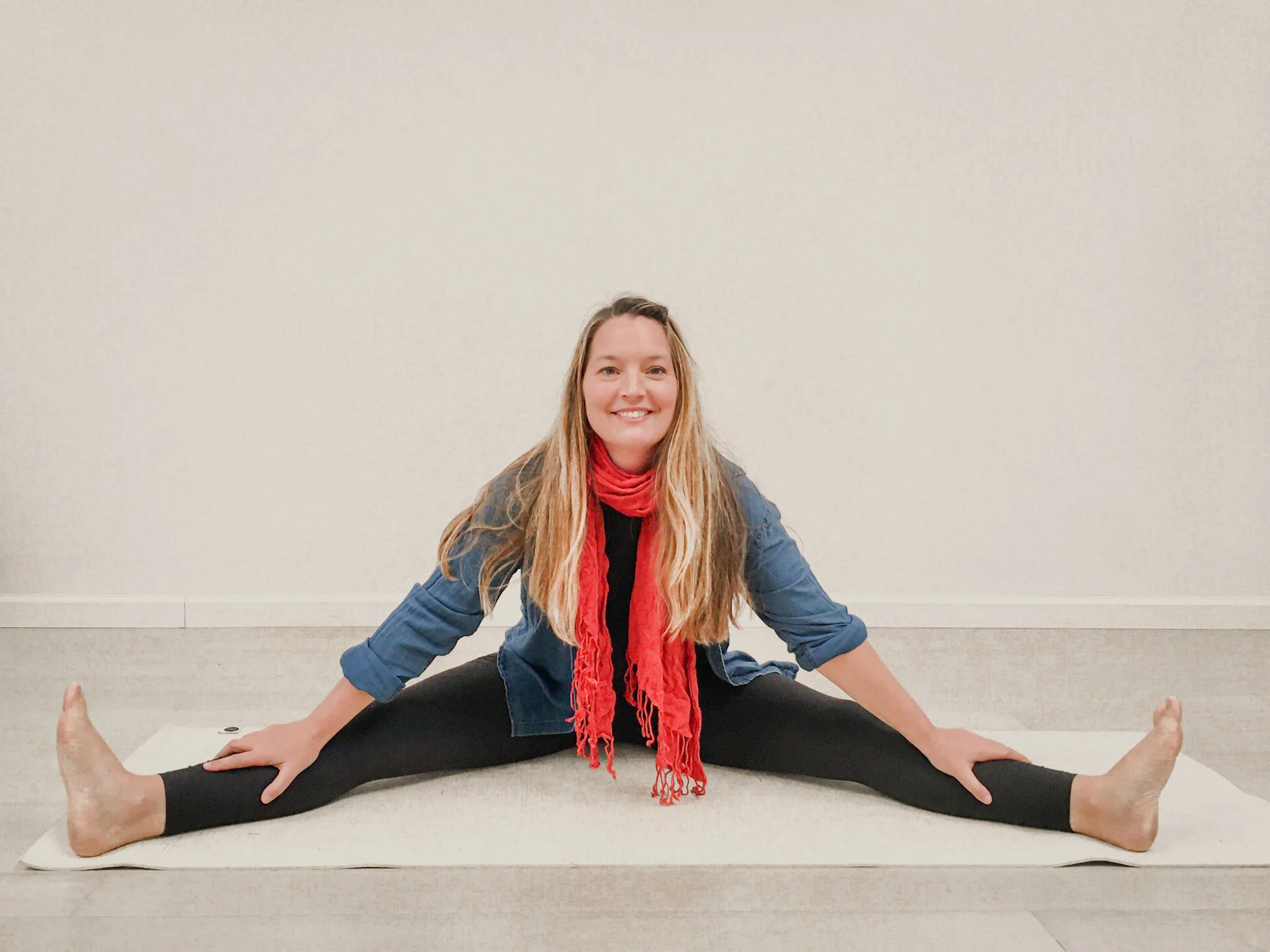
Staff Spotlight: Reba Gray
Nest Staff Spotlight allows fellow teachers, staff members and our yogis the opportunity to delve into the life of a selected community member. We hope this gives everyone a chance to learn more about our teachers and staff.
Reba moved to Boston after spending time in Mali with the Peace Corps. She discovered yoga in 2002 while searching for community. She practiced and trained for 8 years before being moving across country to Oakland. Reba expanded her yoga knowledge, completing trainings in SmartFlow with Annie Carpenter, yoga for traumatic brain injuries and yin yoga. Learn more about Reba below!
What style of yoga do you teach? Why did you choose this method or style?
For group classes, vinyasa. It helps me to shake the dust off, then find restoratives and stillness at the end. With private clients I teach more hatha style and sneak in personal training/work with weights, etc. I’ve also studied a little yin yoga and love kundalini.
What are three things still left on your bucket list?
Drive on the Autobahn, scuba in the Red Sea, and get back to Mali to visit people I met in the Peace Corps 20 years ago.
When was the last time you laughed so hard you cried?
A few weeks ago, with my cousin, who thought I was describing the mandolin instrument, when I was miming a mandoline kitchen slicer. You had to be there.
What are you currently reading, watching or listening to?
Re-reading The Untethered Soul, listening to yoga podcast Food Sex Money Water, watching view of the bay out my window, sunrises and sunsets.
Flashback to when you were 10 years old. What did you want to be when you grew up?
I just wanted to travel and learn. I was not a ‘good’ student, I prefer learning about things experientially.
What is the scariest thing you've ever done for fun?
Jumped off the top of a dam. So much fun. (It wasn’t a huge one or anything.)
If you were to describe yourself as a sandwich, which would you be?
Reuben.
Reba teaches vinyasa at Nest Yoga. Flow with breath to movement and build heat every Sunday morning at 9:30 am! Learn more about Reba by visiting http://www.rebagray.com/ or on Instagram @yogawithreba.

Staff Spotlight: Melina Meza
Our yoga teachers bring life to Nest Yoga. Each teacher is passionate, welcoming and unique. Some have been teaching yoga for decades while others have been instructing for a few years. Because of their desire to learn, we are able to offer a variety of classes including SmartFLOW® Yoga, Yoga Tune Up®, Hatha Yoga, Vinyasa Flow Yoga, Restorative and Yin Yoga, Egoscue Method, Yoga for People with Disabilities and Chronic Conditions and Meditation.
Nest Yoga is thrilled to have Melina Meza on the team! She joined us after the unfortunate closing of Namaste Yoga. Melina has been teaching yoga since 1997 and created Seasonal Vinyasa Yoga, a holistic approach focusing on diet, lifestyle and yoga that moves with the seasons. You can learn more about Melina’s upcoming workshop with Nest Yoga here: Winter Seasonal Health and Wellness – Change Your Life One Week At A Time.
Tell us about yourself. Anything you want the Nest community to know.
I moved to the East Bay about 8 years ago after living in Seattle for most of my adult life. I am so grateful for the weather in Oakland, the diversity, and the variety of avocados at the farmer’s markets! I started teaching yoga almost 25 years ago and have enjoyed teaching weekly classes, workshops, teacher trainings, retreats, and now Seasonal Health and Wellness Programs (next one starts December 4, 2020).
In addition to my love for yoga, Ayurveda, seasonal foods, music, hiking/biking/tennis, community and my husband, I am a photographer! In my free time, I’m usually dreaming up some place to visit with color, texture, or water to play with reflections.
Check out Melina’s photography here: Melina Meza
What style of yoga do you teach? Why did you choose this method or style?
I teach mostly Gentle, Yin and Seasonal Vinyasa Yoga classes. I love the Gentle style classes right now because they attract people who like to practice the way I do! I think I originally started shifting to more Gentle style classes when I had back issues and started doing PT about 10 years ago. Before that...I taught pretty strong flow classes and Yin. As an aging yogini, Gentle is what I crave and feels like the kind of yoga I’ll be doing for the rest of my life. I”m sold!
The Seasonal Yoga classes or workshops are my specialty. In a typical Seasonal Vinyasa Yoga session, I weave in asanas, the wisdom of Ayurveda, healthy lifestyle tips, nutrition and seasonal dharma (truth). I truly believe nature heals and the more we align our lifestyle with her, the healthier we will be. My greatest joy comes from teaching people to reconnect to their environment and the gifts each season brings.
I do Yin Yoga PopUps and enjoy this style of practice because it feels like a bridge to me between asana and meditation. Yin classes also give me a great excuse to read poetry and share yoga philosophy relevant to our times.
If you could instantly become an expert in something what would it be?
Guitar
What are three things still left on your bucket list?
Hike the full P.C.T. (it doesn’t have to be all at once)
Have a solo photography show in a beautiful gallery
Host a Yoga and Photography Retreat
When was the last time you laughed so hard you cried?
A few years ago we took a yoga group to India and were treated to a puppet show at the PALACE we were staying at. The content took us all by surprise and we laughed until we cried. You had to be there!
What are you currently reading, watching or listening to?
Reading The Overstory by Richard Powers
Watching - Just finished, The Queen’s Gambit and loved it!
Listening to: Lady Gaga/Fiona Apple, Sturgill (Cuttin’ Grass) Simpson, Women Sing Tom Waits, and East West for yoga (Prana)
What do you love most about your hometown?
I grew up in Pacific Grove California and love the OCEAN! Asilomar beach at sunset is the best.
Flashback to when you were 10 years old. What did you want to be when you grew up?
A cook - Mexican food
What are you happiest doing when you’re not working?
Outside taking photographs
If you had one day to live over again, what would you pick?
I’ve been blessed with too many incredible days to pick just one!!!
Melina teaches with Nest Yoga Mondays at 8:45 am, Wednesdays at 8:45 am and Fridays at 9:00 am. Check out our schedule for more info!

Staff Spotlight: Natalie Lamb
Nest Staff Spotlight allows fellow teachers, staff members and our yogis the opportunity to delve into the life of a selected community member. We hope this gives everyone a chance to learn more about our teachers and staff.
This week we are featuring our newest Yoga Associate, Natalie! Natalie joined us a couple week before shelter-in-place began. Between classes to become a nurse and her other job, Megan checks in classes through Zoom and works on Nest projects. Many of you have become acquainted with Natalie over Zoom. She is a bright addition to the Nest Yoga team!
Tell us about yourself. Anything you want people to know.
I recently moved to Oakland and am a newer employee at Nest Yoga. I have felt overjoyed with how welcoming the team and community has been. I am excited to continue my work and practice at a yoga studio that shows so much love!
What is your role at Nest Yoga?
Yoga associate
What is your favorite book/movie/tv show/podcast?
My current favorite book is The Secret Power of Yoga, my favorite TV show is Survivor, and recently I’ve been listening to the podcast Oprah Super Soul Conversations. Although I always enjoy indulging in some crime podcasts, too.
4Flashback to when you were 10 years old. What did you want to be when you grow up?
I have always been passionate about working with animals
If you had your own talk show, who would be your first three guests?
Anyone from past or present? Obama, Bob Dylan and Maya Angelou for starters...
What are three things still left on your bucket list?
Visit all national parks in the United States
Hike machu picchu
Learn to hold my handstand
What is your least favorite yoga pose? Favorite yoga pose? Why?
My least favorite pose is Natarajasana (dancer pose); I’ve always found it a little uncomfortable. My favorite is virabhadrasana (warrior two), which makes me feel very grounded.
What do you love most about your hometown?
It’s so full of nature and my family is there.
What’s the craziest fashion trend you ever rocked?
Pj’s in public were my go-to.
What’s a goal you have for yourself that you want to accomplish in the next year?
I’d really like to dive even deeper into my yoga practice and begin meditating everyday.
What hobby would be a lot of fun to get into?
I love getting active outside so maybe rock climbing and/or surfing.
Where is the best place you’ve traveled to and why?
I loved traveling through Spain. The warm, easy-going lifestyle and culture, colorful towns and villages, and the never-endless paella are just some of the things that stole my heart when traveling through this beautiful country.
What is the scariest thing you've ever done for fun?
I went on a jungle walk through the Nepali jungle where we saw wild rhinos and pythons and many more animals that looked hungry.
Our Blog
Check out the latest Articles: